
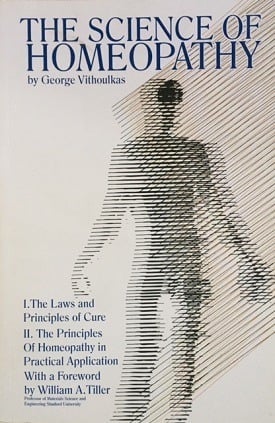
The Science of Homeopathy by GEORGE VITHOULKAS [#VITSCI]
$ 36.00
Description This book is a must read for all doctors and health professionals…and anyone with a serious interest in homeopathy… The Science of Homeopathy by G. Vithoulkas About twenty-five percent of the physicians in the United States were homeopaths at the turn of the century. In “The Science of Homeopathy”, George Vithoulkas provides an objective and concise treatise of this approach, focusing upon the basic principles and clinical applications of homeopathy. Through the integration of homeopathic and allopathic medicines, a true system of health care can evolve with an emphasis upon the individual as an integrated organism. In “The Science of Homeopathy”, George Vithoulkas has compiled a clear and comprehensive text outlining both the theory and practice of this important medicine. In Section One, “The Laws and Principles of Cure”, Vithoulkas sets forth the principles of electrodynamic energy, the ‘vital force’, predisposition to disease, and the selection of homeopathic remedies. In Section Two, “Practical Application”, he gives a detailed explanation of the methods of diagnosis, and the preparation, administration, and evaluation of homeopathic cures. Written in clear, concise language, with ample illustrations, references and case studies, The Science of Homeopathy is an excellent reference for homeopathic physicians and an informative introduction for the interested lay person. Table of contents: Section I: The Laws and Principles of Cure Introduction 1. The Human Being in the Environment 2. The Three Levels of the Human Being Mental Plane Emotional Plane Physical Plane The Definition and Measure of Health 3. The Human Being Functioning as an Integrated Totality 4. Vital Force as seen by modern science 5. The Vital Force in Disease Basic concepts of physics The Defense Mechanism 6. The Fundamental Law of Cure Samuel Hahnemann The proving of remedies 7. The Therapeutic Agent on the Dynamic Plane 8. Dynamic Interaction of Disease Acute Disease Influence Suppressive Therapies Vaccination 9. Predisposition to Disease Section II. The Principles of Homeopathy in Practical Application Introduction 10. The Birth of a remedy Preparation for a Proving Location for the Experiment The Experiment Formulation of Materia Medicas 11. Preparation of Medicines Initial Preparation of crude substances Standard preparation Nomenclature 12. Taking the case The setting Eliciting the symptoms Recording of symptoms Difficult Cases Taking the Acute Case 13. Evaluation of symptoms The Homeopathic Repertory 14. Case analysis and First Prescription (Read full excerpt) Initial Prognostic Evaluation Case Analysis for the Beginner Case analysis for advanced prescribers Selection of Potency Single Remedy 15. The Follow-up Interview Time interval for scheduling follow-ups Format for the follow-up visit The Homeopathic aggravation Evaluation at One Month 16. Principles Involved in Long-Term Management Fundamental Principles Application in Particular Patient Categories Deep Miasmatic Cases Incurable Cases 17. Complicated Cases Homeopathically Disordered Cases Allopathically Disordered or Suppressed Cases 18. Handling of remedies and interfering factors 19. Homeopathy for the Dying Patient 20. Socioeconomic and Political Implications of Homeopathy Appendix A. Hahnemann’s Proving of Arsenicum Album Appendix B. Patient Evaluations at One Month (read excerpt) Paperback 306 Pages


Related products
-
 Bakery van Vessem – HaarlemSelect options
This product has multiple variants. The options may be chosen on the product page
Bakery van Vessem – HaarlemSelect options
This product has multiple variants. The options may be chosen on the product page
-
 House on the Flemish coastSelect options
This product has multiple variants. The options may be chosen on the product page
House on the Flemish coastSelect options
This product has multiple variants. The options may be chosen on the product page
-
 Isabella Pastry Shop CologneSelect options
This product has multiple variants. The options may be chosen on the product page
Isabella Pastry Shop CologneSelect options
This product has multiple variants. The options may be chosen on the product page