
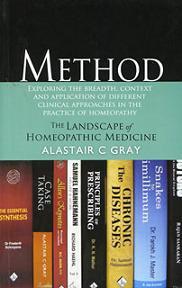
Method: Exploring the Breadth, Context and Application of Different Clinical Approaches in the Practice of Homeopathy by ALASTAIR GRAY [#GRAMET]
$ 39.60
Description Method: Exploring the Breadth, Context and Application of Different Clinical Approaches in the Practice of Homeopathy – The Landscape of Homeopathic Medicine by Alastair Gray What are the different methods of prescribing in homeopathy? Why is homeopathic medicine practiced so differently world wide, from one country to another, from one city, one village, one street, one consultation room to the next? It is not through any lack of tradition, research, evidence or rigour, all of which homeopathic medicine has in abundance. Rather, it is about interpretation of the key and fundamental principles of homeopathy and ultimately the immediate needs of the client and patient sitting in the consultation room in front of that practitioner. In order to take in and integrate this broad landscape, this book explores the historical, theoretical and practical application of the major methods employed by homeopaths across the globe Contents Foreword in Acknowledgements vii Contributors ix Publisher’s Note xiii Chapters Introduction 3 Why This Book 6 Literature Review 9 Watson’s Methodologies 10 Nomenclature, Method and Methodology 15 The Different Methods and Their Classification 16 Method at the Coalface of Homeopathy – A Personal Story 17 Flexibility with Principle 21 Culture, Football and Buddhism 22 What Authors Say, What They Do, and Change over Time 24 Hahnemann, Bonninghausen and the Totality of Characteristic Symptoms of the Disease 29 Totality of the Characteristic Symptoms of the Disease 31 Samuel Hahnemann 1755-1843 33 Hahnemann in Paris 42 His Cases / How He Practiced 44 Cases Illustrative of Homeopathic Practice 45 Some other cases 53 Underpinnings of Hahnemannian Homeopathy 57 Peculiarity 57 Totality 58 Causation 59 Health 59 Disease 61 Cure 61 von Bönninghausen (1785-1864) 62 Complete Symptom 63 The Therapeutic Pocketbook 65 Cases 66 Disadvantages of the Method 69 Advantages of the Method 71 Method in Epidemic Diseases 73 Further Reading 76 Kent and the Totality of the Characteristics of the Person 77 The Person not the Disease 79 Totality of the Characteristics of the Person 80 James Tyler Kent, 1849-1916 82 Kent’s Legacy 84 Swedenborg 86 What Is Disease? 90 Kentianism 92 Kent’s Other Influences on Homeopathy 95 Repertory 95 Types 96 Books 96 Potency and Remedies 96 Waiting and Waiting 97 Kent’s Hierarchy 97 The Mind 98 Kent’s Case Work 100 Subtle Changes 106 Case Examples 107 Strategy 109 Further Reading 110 Constitution and Constitutional Prescribing 111 Introduction 113 The Confusion 114 The Prescribing Style in a Nutshell 116 The Disadvantages of Constitutional Prescribing 118 Kent, Watson and Constitution 119 Massive Totality 121 Limitations 121 Definitions of Constitution 125 Etymology of the Word ‘Constitution’ in the Context of Homeopathy 127 Advocates of Constitutional Prescribing 129 Hydrogenoid Constitution 135 From von Grauvogl’s practice 135 Oxygenoid 144 Carbo-nitrogenoid Constitution 145 From von Grauvogl’s Practice 146 Lesser and Nebel 149 Carbonic 151 Phosphoric 152 Flouric 152 Vannier’s Constitution and Types 152 Constitutional Prescribing in Light of a True Understanding of Constitution 155 Ingredients Needed for a Constitutional Prescription 160 Mappa Mundi and Temperaments 163 Little on the Phlegmatic Temperament 167 The Temperament of the Phlegmatic 168 Phlegmatic Bodily Constitution (Generals) 170 Phlegmatic Predispositions (Diathesis and Miasms) 172 Phlegmatic Remedies 174 Conclusions 175 Of Practical Use 177 Further Reading 179 Vital Sensation Shilpa Bhouraskar 181 Introduction 185 The Evolution of Homeopathy in Stages 188 Comparison of Stages, Disease and Medicine Understanding 193 Application of the Stages in Practice 193 Confirm Your Prescription Through All the Four Stages 193 A Case Example Incorporating All Stages 194 Which Approach to Use and When 212 The Sensation Method Compared With the Earlier Methods 215 Conclusion 218 Further Reading 218 Miasmatic Prescribing Jennifer Osborne 219 The Use of Nosodes 219 The use of anti-miasmatic remedies 220 Faithfulness in Tracing the Picture of the Disease 225 What Is Miasmatic Prescribing? 230 Nosodes as the Simillimum and Intercurrents 230 Other Application of Intercurrents 234 Other Benefits of a Knowledge and Understanding of Miasms 236 References 240 Further Reading 242 Jan Scholten’s Group Analysis Greg Cope 243 Jan Scholten 247 Group Analysis 249 Reverse Law of Similars 251 Homeopathy and the Minerals 251 Homeopathy and the Elements 255 The Plant Kingdom 260 Prescribing Techniques 261 Case example 263 References 269 Further Reading 270 Eizayaga Ben Gadd 271 Introduction 275 About Eizayaga 278 Treating the Patient versus Treating the Disease 279 Different Types of Similitude 280 Totality of Symptoms 282 Classification of Symptoms 284 Classification of Diseases 285 Layers 287 Lesion Layer 287 Fundamental Layer 289 Constitutional Layer 290 Miasmatic Layer 293 Prescribing 294 Posology 295 Repertory 296 Criticisms of Eizayaga’s Approach 297 Case Example 298 Conclusion 303 References and Further Reading 304 Keynote Prescribing 307 Definitions 309 Keynote Materia Medica’s 310 Why Keynote Prescribing at All? 311 Misapplication 313 History and Development of Keynote Prescribing 314 The Components of the Method 316 Totality Again 316 Red-line Symptoms 317 Will Taylor and Meg Ryan – Practical Keynote Prescribing 318 What are the Characteristic Features of a Keynote? 320 The “Three-legged Stool’ Approach to Keynotes 321 Storming the Fortress / Achieving Break-through at the Weak Spots 322 ‘Minimum Syndrome of Maximum Value’ 323 Experts at Work – a Few More Examples 324 Analogous Parts 328 Ruling Features of the Case Reflect the ‘Genius’ of the Remedy 328 Other Leading Proponents 332 Advantages of Keynote Prescribing 339 Disadvantages of Keynote Prescribing 342 Further Reading 344 Isopathy 345 Definitions 348 Introduction 348 Practicalities 350 Context 351 Isopathy and Pre-Homeopathic History 352 Advocates 357 The Response to Isopathy 361 Collet and Others 364 The Controversy 365 Refining the Method 379 Advantages and Some Extraordinary Examples 380 Conclusion 385 Further Reading 385 Appendix 387 Tautopathy 397 Definition 400 What Exactly Is the Method? 400 Why Do We Need It? 402 Review of the Literature 404 Application of Tautopathy 417 The Pill, Naprosyn and Cortisone and Vaccinations 418 Intercurrent Prescribing 419 Case Examples – Patel 420 Who Uses It Today and Research 422 Limitations 423 Provings and Tautopathy 423 Further Reading 424 Appendix 425 Organ Prescribing, Organopathy and Burnett 429 Introduction 432 Background 432 Affinity, Organ Prescribing, Organopathy, Supporting the Organs 434 Specificity of Seat 435 Locality 439 The Limitations of the Totality of Symptoms’ 443 Drilling Deeper: Burnett’s Influences 446 Rademacher and the Organ Remedies 447 Burnett’s Cases 449 Burnett’s Use of Potency 454 The Organ Remedies 455 Random Gems from Burnett, Rademacher and Others 456 Nosodes 459 For and Against 460 Computers and Burnett 462 Burnett’s Works 462 Conclusion 463 Further Reading 466 Polypharmacy, Complexes and Combinations 467 Definitions 469 Literature and Opinion 469 Controversy, Mongrelism, Multilation and Perversion 470 The Double Remedy Experiments of 1833 472 The Technique Itself 487 Why NO! Opinions Past and Present 489 Contemporary Opposition 501 Why Yes! Opinions – Past and Present 509 Some Commonly Used Combinations 510 When Is it Best to Use Polypharmacy? 514 Further Reading 516 Conclusion 519 Method and Totality 519 If You Meet Hahnemann on the Road, Kill Him 526 The Influence of Hahnemann 527 The Implications of Individualism in Homeopathy 532 Teachers in Contemporary Homeopathy 537 Method or No Method 539 Implications for Practice 543 References 545 Index 559 Paperback, 564 Pages ISBN 978-2-87491-0210 1Lbs. 10oz.


Related products
-
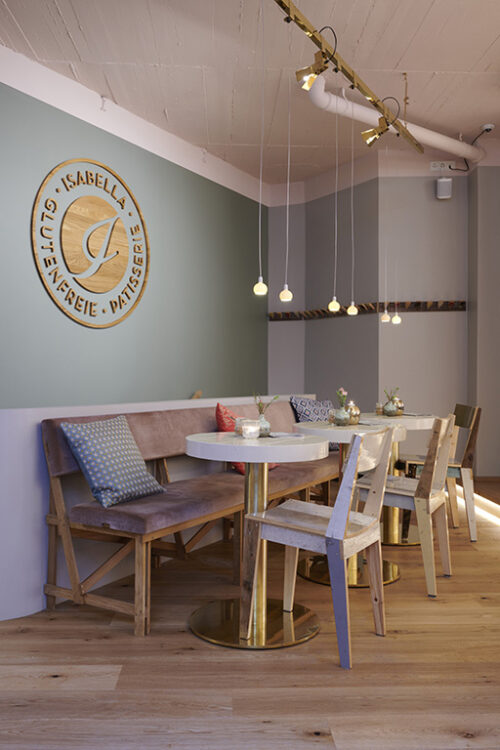 Isabella Pastry Shop CologneSelect options
This product has multiple variants. The options may be chosen on the product page
Isabella Pastry Shop CologneSelect options
This product has multiple variants. The options may be chosen on the product page
-
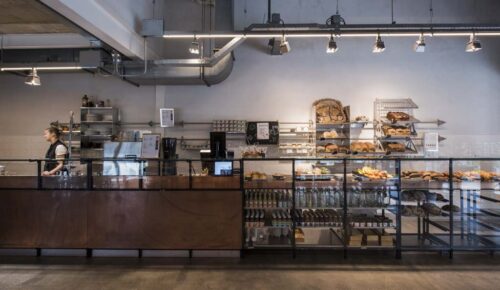 Bakery van Vessem – HaarlemSelect options
This product has multiple variants. The options may be chosen on the product page
Bakery van Vessem – HaarlemSelect options
This product has multiple variants. The options may be chosen on the product page
-
 Artist’s studio for Marc MuldersSelect options
This product has multiple variants. The options may be chosen on the product page
Artist’s studio for Marc MuldersSelect options
This product has multiple variants. The options may be chosen on the product page